Leonardo da Vinci in Milan: Complete Guide to All Sites

Travel Analysts
📄Discover Leonardo da Vinci’s Milan in one trip, from the Last Supper to key museums and neighborhoods that preserve his art, inventions and legacy around the city.

💡 Quick Answer
A complete Leonardo da Vinci trip in Milan combines the Last Supper at Santa Maria delle Grazie with key sites like Sforza Castle, the Ambrosiana (Codex Atlanticus), the Science & Technology Museum and Leonardo‑focused museums in the center, all easily linked in one or two sightseeing days.
Explore the full guide & expert tips ➜Who Was Leonardo da Vinci in Milan?
Leonardo da Vinci spent around 18–20 years in Milan, principalmente al servicio de Ludovico Sforza (“il Moro”), convirtiéndose en pintor y arquitecto de corte y en ingeniero de referencia para proyectos urbanos. Llegó hacia 1482 ofreciendo sus habilidades en ingeniería militar, hidráulica y espectáculos de corte, y durante los años milaneses desarrolló algunas de sus obras y proyectos más influyentes.
En Milán pintó la Última Cena en el refectorio de Santa Maria delle Grazie y decoró la Sala delle Asse del Castello Sforzesco, dos de los únicos grandes conjuntos murales de Leonardo conservados hoy. También trabajó en proyectos de canales y esclusas para el sistema de los Navigli, además de diseñar máquinas, estudios de anatomía y proyectos arquitectónicos que se conservan en manuscritos como el Codex Atlanticus.

All the Main Leonardo Sites in Milan at a Glance
Here are the key Leonardo places you can realistically fit into one trip, sin volverte loco con traslados.
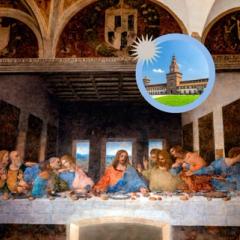
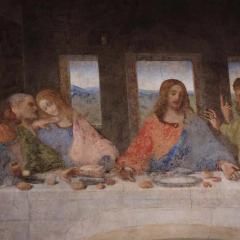
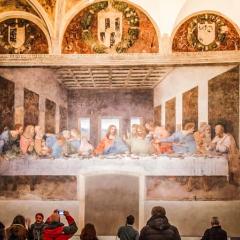
- Santa Maria delle Grazie – The Last Supper (Cenacolo Vinciano)
Home to Leonardo’s famous mural of the Last Supper, painted between 1490s in the refectory of the Dominican convent and today protected by strict timed entry. - Castello Sforzesco – Sala delle Asse and Leonardesque works
The Sforza Castle preserves the Sala delle Asse, a room whose walls and vault Leonardo decorated with an intricate illusion of trees and branches, plus manuscripts and drawings linked to his work at court. - Pinacoteca Ambrosiana – Codex Atlanticus and paintings
This historic library and art gallery houses the Codex Atlanticus, the largest surviving collection of Leonardo’s notes and technical sketches, as well as works like “Il Musico” displayed in a dedicated Leonardo room. - Museo Nazionale Scienza e Tecnologia “Leonardo da Vinci”
Italy’s largest science and technology museum, with a major section devoted to Leonardo that includes models built from his designs for machines, bridges, flying devices and war inventions. - Leonardo‑related museums in the center (Leonardo3 and others)
Near Piazza della Scala, the interactive Leonardo3 Museum offers digital reconstructions and hands‑on models that help you understand his inventions and artworks in a more experiential way. - Navigli district and Leonardo’s canals
Around the Navigli you can still trace the system of canals and locks that Leonardo helped design and improve, now one of Milan’s liveliest neighborhoods but con paneles y recorridos que explican su legado hidráulico.
🎨 Leonardo da Vinci Sites in Milan
One‑Day Leonardo Itinerary: Last Supper and Historic Milan
Start your day near Santa Maria delle Grazie with a reserved morning slot for the Last Supper, arriving 20–30 minutes early to collect tickets and pass controls without stress. After your 15‑minute viewing, take a short walk to see the church itself and nearby sights like Corso Magenta or San Maurizio al Monastero Maggiore, sometimes called “the Sistine Chapel of Milan”.
From Santa Maria delle Grazie you can walk about 15–20 minutes or hop on the metro to reach Castello Sforzesco, where you visit the courtyards and, time permitting, the museums and the Sala delle Asse linked to Leonardo. Many combined tours follow exactamente este esquema (Last Supper + Sforza Castle), demostrando que encaja bien en una sola jornada junto con un paseo por Parco Sempione o el centro histórico.
📅 Leonardo Milan Itineraries
Two‑Day Leonardo Itinerary: Add Museums and Codex Atlanticus
On day 1, focus on the classics: visit the Last Supper at Santa Maria delle Grazie with a reserved slot in the morning and then walk or take the metro to Castello Sforzesco for the courtyards, museums and the Sala delle Asse. You can finish the afternoon with a stroll through Parco Sempione and the historic center, or add a short Duomo/Brera stop if todavía tenés energía.
On day 2, start at the Pinacoteca Ambrosiana, reservando alrededor de 1–1,5 horas para ver el Codex Atlanticus y la colección principal con calma. After lunch, dedicate at least 3–4 hours to the Museo Nazionale Scienza e Tecnologia “Leonardo da Vinci”, donde las galerías de Leonardo y los modelos de sus máquinas permiten ver sus ideas en 3D y suelen recomendarse como visita de medio día.
How to Book Tickets for Leonardo Sites in Milan
For the Last Supper, you must book in advance through the official Cenacolo Vinciano system (online or call center), choosing a time slot and ticket type; third‑party agencies sell combined tickets and tours but with higher prices and added fees. The safest strategy es reservar apenas se abren los cupos (2–3 meses antes) y usar tours solo como plan B cuando el cupo oficial ya está agotado.
For other Leonardo sites, you can usually buy tickets directly from each museum: Pinacoteca Ambrosiana and its Codex Atlanticus, the Museo Nazionale Scienza e Tecnologia, Leonardo3 Museum and Leonardo’s Vineyard all ofrecen entradas individuales online y, a veces, combos o audioguías. Some agencies bundle multiple Leonardo attractions (for example Last Supper + Ambrosiana or Last Supper + Brera), which can simplify logistics if you prefer a one‑click solution and don’t mind paying a bit extra.
Getting Around: Metro, Walking Distances and Best Areas to Stay
Most Leonardo sites in Milan sit fairly céntricos and are easy to link by metro and short walks: Santa Maria delle Grazie (Last Supper), Castello Sforzesco, the Ambrosiana and the Science & Technology Museum are all within roughly 15–25 minutes’ walk from the Duomo area. The metro (especially lines M1 red and M2 green) connects hubs like Duomo, Cadorna, Sant’Ambrogio and Navigli, so it’s simple to jump between Leonardo spots if you don’t want to walk everywhere.
For accommodation, staying around the Centro Storico/Duomo, Cadorna–Sempione or near Navigli gives you fast access to most Leonardo locations plus good transport links for the rest of the city. If you like doing everything a pie, el centro histórico es la mejor base; si preferís ambiente nocturno junto a los canales diseñados en parte por Leonardo, Navigli es ideal, aunque un poco más ruidoso.

Practical Tips for a Leonardo‑Focused Trip (Best Time, Dress Code, Tours)
The best months for a Leonardo‑focused trip are spring and early autumn, when temperatures are pleasant and walking between sites like the Last Supper, Sforza Castle and Navigli is más llevadero que en pleno verano. Always check opening days and special exhibitions in advance, especially for the Ambrosiana and the Science & Technology Museum, because Leonardo rooms or Codex displays can rotate or close parcialmente.
For churches such as Santa Maria delle Grazie, follow a simple modest dress code (shoulders and very short shorts may be an issue), and plan to arrive early for any timed entry to avoid losing the slot. If you prefer context without organizar todo solo, consider a half‑day or full‑day Leonardo tour that bundles the Last Supper with Sforza Castle or central museums, but revisá bien qué incluye (entradas, auriculares, tamaño del grupo) antes de reservar.
About the Author
Intercoper Curator Team
Travel Analysts
The editorial team at Intercoper researches, verifies, and curates the best tour experiences in Milan and across Europe's most visited landmarks and museums.
❓ Frequently Asked Questions
Our recommended Last Supper Tours


The Last Supper Has the Highest Markup in European Tourism: 10.7xHow to Buy Official Last Supper Tickets (Step-by-Step Guide)Last Supper Milan Tickets: Prices, Types and Discounts ExplainedLast Supper Milan Tickets Sold Out: What To Do NextIs the Last Supper Worth It? Honest Pros, Cons and Alternatives in MilanBest Guided Tours in Milan: Last Supper and Duomo in One DayCommon Mistakes to Avoid When Booking Last Supper Tickets and ToursHow to Visit the Last Supper in Milan in One Day: Itineraries from the Duomo and Central StationLeonardo da Vinci in Milan: Complete Guide to All SitesAccessible Last Supper Tour: Wheelchair Access and Low-Mobility TipsHow Leonardo Painted the Last Supper: Technique, Secrets and RestorationLast Supper and Lake Como Day Trip: Is It Possible?Small Group vs Private Last Supper Tours: Which Is Best?What to Wear to See the Last Supper and the Duomo in Milan